
Subcontractors VS Employees:
The Hidden Roofing Liability Minnesota Homeowners Must Know
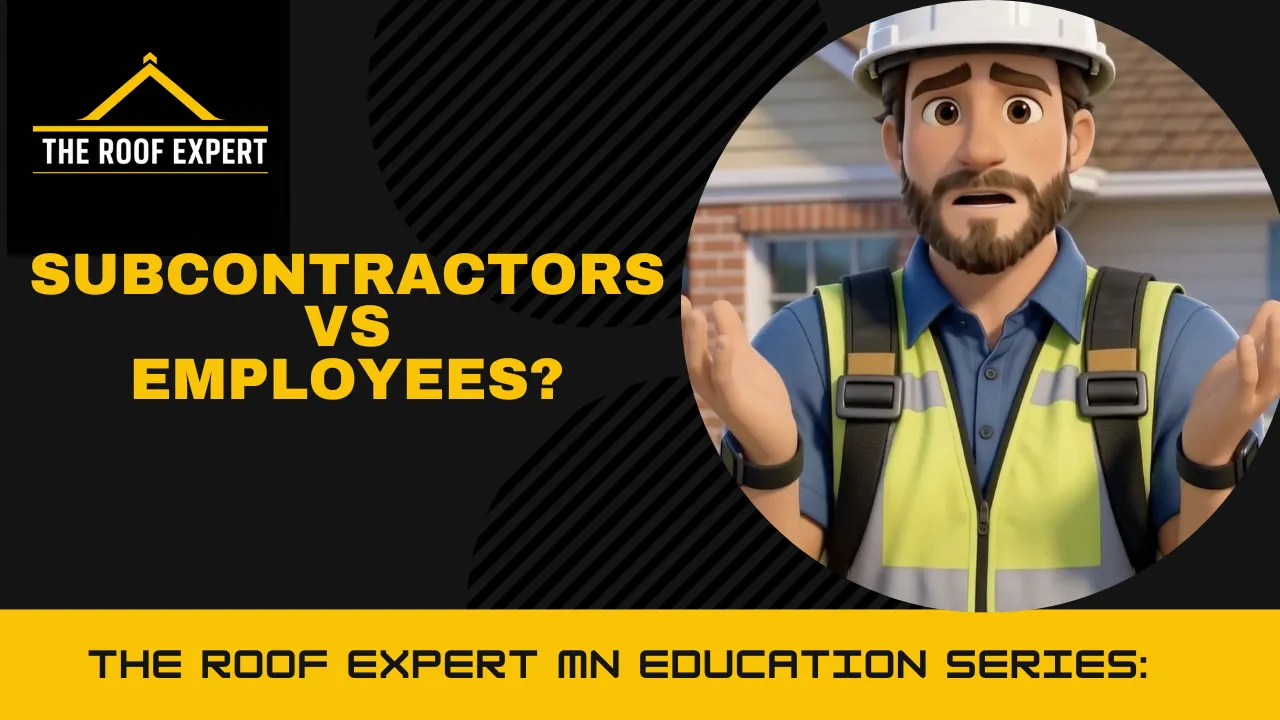
When you hire a Twin Cities roofing company, you assume the crew showing up at your house on Monday morning actually works for the person who sold you the roof. But in the modern roofing industry, that is rarely the case.
There is a massive difference between a company that utilizes in-house W2 employees and a company that relies entirely on 1099 independent subcontractors. Knowing this difference is the secret to protecting your property value, avoiding legal liability, and ensuring your roof warranty actually holds up.
Here is what out-of-state storm chasers don't want you to know about their labor force.
Who Is Actually Tearing Off Your Roof?
Many modern roofing operations are essentially just high-pressure sales and marketing firms. Once you sign the contract and hand over your deposit, they broker your project out to the cheapest available independent subcontracting crew.
While there are fantastic, highly skilled independent crews in Minnesota, the "middleman" model creates a dangerous gap in accountability:
No Direct Quality Control: If the crew is paid by the job (not by the hour), they are financially incentivized to tear off and install your shingles as fast as humanly possible, often cutting corners on critical flashing and underlayment.The Warranty Trap: If your roof leaks two years from now, the sales company will often blame the subcontractor for a faulty installation. But when you try to track down that specific crew, their LLC may no longer exist.

No Direct Quality Control: If the crew is paid by the job (not by the hour), they are financially incentivized to tear off and install your shingles as fast as humanly possible, often cutting corners on critical flashing and underlayment.
The Warranty Trap: If your roof leaks two years from now, the sales company will often blame the subcontractor for a faulty installation. But when you try to track down that specific crew, their LLC may no longer exist.
The Strict New Minnesota Laws Protecting Homeowners
The state of Minnesota has recognized this liability issue. Under Minnesota law, it is illegal for employers to misclassify workers who are employees as independent contractors. Minnesota Dept....
In fact, effective March 1, 2025, Minnesota workers in the construction industry must satisfy a strict 14-factor test to legally be considered independent contractors.This new legislation is designed to crack down on out-of-state "storm chaser" companies who use undocumented or unverified, cheap labor pools to increase their profit margins while leaving homeowners at risk. Felhaber Larson...
Why Does This Legal Shift Matter to Your Property?
If a company utilizes cheap, unverified subcontractors who do not carry their own proper, localized Workers' Compensation and General Liability insurance, the legal burden shifts. If a worker falls off your roof and sustains a severe injury, and neither the sales company nor the subcontractor has adequate coverage, you (and your homeowner's insurance) can be held financially liable.
3 Vetting Questions to Ask Your
Twin Cities Contractor
Before you sign an estimate, force the contractor to answer these three specific questions regarding their labor force:
1. "Who exactly will be on my roof?" Ask if the crew members are direct W2 employees or 1099 subcontractors.
2. "Who is managing the site?" If they use subcontractors, demand that a direct W2 employee (a foreman or project manager) from the main company is physically present on your property at all times during the build to oversee quality control.
3. "Can you provide a Certificate of Insurance (COI) that covers the specific crew doing the work?" Never accept a verbal "yes." Require them to email you a valid, active COI before materials are dropped in your driveway.
Protect Your Home & Your Wallet Today
Don't let aggressive sales tactics force you into a massive liability. Get the exact step-by-step checklist we use to audit local contractors and verify their labor force.
Download The 2026 Twin Cities Homeowner’s Roof Protection Blueprint Join over 400 Twin Cities homeowners using independent data to outsmart the roofing industry.
[ GET OUR FREE BLUEPRINT NOW ]

"Get Connected With A Vetted Local Expert"
© 2026 The Roof Expert USA.,
All Rights Reserved